Special Needs Summer Camp Guides
Special Needs Camp Life and Preparation: A Guide for Families

Special needs camps vary widely in how they are designed and what they offer. What follows reflects common patterns across program types; individual programs differ, and families should confirm specifics directly with any camp they are considering.
Families of children with disabilities spend most of their energy on the selection decision: finding the right camp, evaluating programs, asking the right questions. That work matters. But preparation and an understanding of what camp life actually looks like are equally important, and often overlooked. When families arrive at a session without that groundwork, these gaps often show up in ways families can anticipate: a child whose distress goes unrecognized because no one knew what to look for, a misalignment between program format and your child’s readiness that surfaces as behavioral escalation, an early pickup logged as camp not being a fit when the real issue was preparation, not program. For children with disabilities, where the stakes of a mismatch are higher and the signals can be harder to interpret, arriving underprepared can make the start of camp more challenging.
This guide collects the resources families need to prepare effectively and navigate the session with confidence. What a family does before the first day shapes what their child experiences during it.
Articles in This Guide
Understanding the camp day:

What to Expect at Special Needs Camp: How the Day Is Structured
A detailed walkthrough of how the camp day is organized across program types, from morning routine to evening wind-down, and what to ask about the structure before enrolling.
Learn MorePreparing for the session:
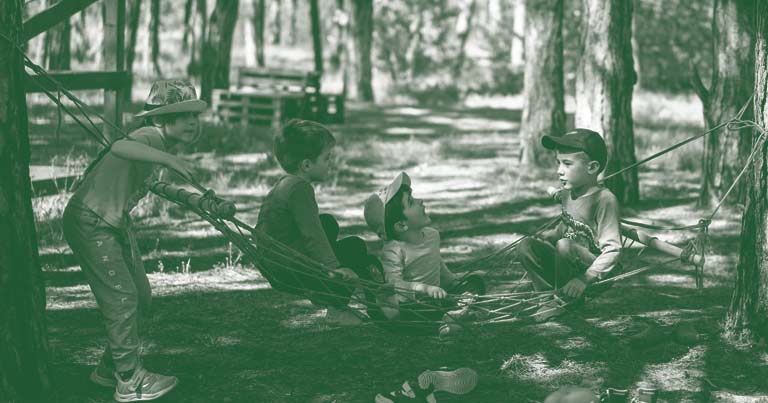
Tips for Preparing Your Child for Overnight Camp
Practical guidance on preparing a neurodivergent child for overnight camp, including what to communicate to the program, what to do before drop-off, and what to avoid.
Learn More
Day vs. Overnight Camp: Choosing the Right Format for Your Child
How the two formats differ in what they ask of a child with disabilities, and how format choice shapes what families need to prepare for before the session begins.
Learn MoreDuring the session:

Managing Homesickness at Camp
How homesickness presents differently in children with disabilities, what programs do to anticipate and respond to it, and how families can navigate the session without escalating too early or waiting too long.
Learn MoreProgram design and camp life:

Mindfulness at Camp: Supporting Your Child’s Growth
A practitioner’s account of how intentional mindfulness programming supports social and emotional growth at camp for children who find structured reflection helpful.
Learn More
The Importance of Structure for the Twice-Exceptional Mind
Seven strategies from a camp director for supporting twice-exceptional youth through intentional environmental and program design.
Learn MoreWhat Camp Life Looks Like for Children with Disabilities
Camp life at a special needs program is more than camp with added accommodations. It is an intentionally designed environment where the daily schedule, the staffing model, the physical setting, and the activity design all work together to create conditions for growth that children with disabilities often cannot access in other settings. Understanding those differences helps families evaluate programs more accurately and prepare their child more effectively.
The most important difference is not what the program offers but how it operates. Two programs can have identical activity rosters and opposite approaches to transitions, staff continuity, unstructured time, and behavioral support. When a child is placed in a program that is not the right fit for your child’s needs, even strong preparation may not be enough to overcome the mismatch. Knowing what good program design looks like, and what the daily experience feels like from a child’s perspective, gives families the ability to ask the right questions and interpret what they observe during the session.
For a detailed look at how the camp day is structured and how it varies across different program types, see our post on what to expect at special needs camp.
Preparation Starts Before the Session
The weeks before a session are where camp success is built or undermined. Preparation happens on three levels, each affecting outcomes in different ways.
The first is what families communicate to the program. The intake process is not a formality. It is the mechanism through which a program learns what a child’s distress looks like, what has helped in the past, and what tends to make things worse. Families who treat it carefully give the program tools it cannot improvise.
Families who hold back information, from a desire not to stigmatize their child or from uncertainty about what is relevant, limit the program’s ability to support your child effectively.
The second is what families do with the child before drop-off. Practicing separation in lower-stakes contexts, building familiarity with scheduled environments, and discussing what the session will look like in concrete, matter-of-fact terms all reduce the newness your child experiences on the first day. For children with disabilities, this kind of preparation is often more complicated to arrange and more important to do.
The third is what families say in the days before camp. For children with anxiety or literal thinking patterns, well-intentioned phrases can set the wrong expectation before the session even begins. The framing families use shapes what a child expects and how they interpret difficulty when it arises.
For a detailed guide to overnight camp preparation specifically, see our post on preparing a neurodivergent child for overnight camp.
How Camp Format Shapes Preparation
The format a child attends is a factor to plan for, not a separate choice path. It determines what families need to prepare for. Day programs concentrate the emotional difficulty at daily drop-off and pickup. Residential overnight programs concentrate it at initial separation and the evening period.
If a child is not yet ready for overnight separation, it does not mean they are behind. It signals what preparation will best support them at this stage. Knowing how format interacts with your child’s needs, separation history, and health requirements helps families make choices that reduce preparation stress. It also sets up the most supportive conditions for your child.
For the full framework on how day and overnight formats differ for children with disabilities and how to weigh the choice, see our post on day camp vs. overnight camp for children with disabilities.
During the Session: What Families Should Know
The session is when parental anxiety peaks, often precisely because there is nothing obvious for a family to do. Understanding what is happening on the program’s end, how to read the information families receive, and when to act is its own form of preparation.
Most qualified special needs camps limit or delay family contact during the first 48 to 72 hours of a session. That window is not indifference. It is the period during which a child is most likely to adjust, and during which a phone call home is most likely to interrupt that adjustment rather than support it. Families who arrive at drop-off without understanding that policy, and without a clear picture of what silence means and what would trigger a call from the program, are set up for a difficult few days regardless of how well the child is actually doing.
When updates do arrive, read them as small snapshots rather than the full story. A child who had a hard morning and joined the afternoon activity is adjusting. A pattern of consecutive flat or disengaged reports across multiple days is worth a follow-up. Understanding this ahead of time helps families respond better.
When genuine difficulty does emerge, knowing how to recognize what is normal adjustment versus real difficulty, and how to have a productive conversation with the program about what is being observed and what has been tried, is what separates families who navigate the session well from those who escalate or withdraw prematurely.
For a detailed guide to homesickness and how it presents differently in children with disabilities, see our post on managing homesickness at special needs camp.
The Role of Program Design in Camp Life
Not all special needs programs are equally equipped to support children with disabilities during the session, and the differences are often invisible in a listing. What you observe, or notice is missing, during and after the session often shows how the program was designed.
A program that has invested in staff training on recognizing distress across communication profiles will respond differently to a child who is struggling than one that has not. A program with careful management of transitions built into the daily schedule produces a different experience than one where transitions are gaps between activities. A program that has thought carefully about the emotional rhythm of evenings will support a child through that pressure point differently than one that treats it as downtime.
Parents can ask about these before enrolling and observe them in how the program communicates during the session. When staff updates reflect a specific, informed picture of your child’s day rather than generic reassurance, that is program design working. When your child comes home describing the same consistent adult who was with them from morning to evening, that is program design working. These signals are available to families who know what to look for.
For a practitioner’s perspective on how intentional program design serves children with specific needs, see our posts on mindfulness and meditation at camp and the importance of structure for the twice-exceptional mind.
Using the VerySpecialCamps.com Directory
Families who have read this guide and are ready to evaluate specific programs can use the VerySpecialCamps.com directory to filter by population, format, and program type. The focus level designation on individual listings helps assess how central a specialty is to a program’s design. A Primary Focus designation means the program is specifically built around that population. A General Support designation means the population is served but is not the program’s central focus.
Use the directory to explore programs, then use the questions and tips in this guide to find the best fit for your child.
Browse the full directory at VerySpecialCamps.com.
This guide is part of the Special Needs Camp Guides collection on VerySpecialCamps.com.
The goal of these guides is to help families and professionals ask better questions and make more informed decisions about special needs camps. Because every camp differs in its programs, staffing, policies, and capabilities, always confirm the details that matter most to your situation directly with the camp. When decisions involve an individual's medical, educational, behavioral, or legal needs, consult the appropriate professionals.
Search Special Needs Camp Guides


