Special Needs Camp Resources
Special Needs Camp Community
Directors: Get Ready for Summer 2026: Update Your Camp Listing Today!
Camp directors, it’s time to prepare for the upcoming 2026 summer season! Ensure your listing on VerySpecialCamps.com is up-to-date so parents and campers can find accurate information about your camp.
Please take a moment to update key details, including:
- Session dates
- Rates/cost
- Changes in camp programming
- New facilities
- Virtual (online) programming options
- Recent photos or videos (if applicable)
Click here to update your listing. You can update your information and media as often as needed.
Looking to upgrade? A Multi-Media Listing ($99/year for 12 consecutive months) gives you higher visibility, plus the ability to display a logo, six photos, a map, and an embedded video to make your camp stand out.
For Campers and Families
If you’re searching for a camp for Summer 2026, please note that some camps are still in the process of updating their information. We recommend contacting camps directly to confirm the most accurate and up-to-date details!
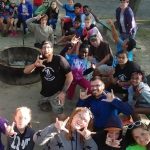
Using Inclusive Language for camps.
A few days ago, I went to update our camp information for the 2026 season, I was surprised to find an outdated term when reviewing the camp submission. This was not for the public to see, but under “Camp Emphasis” the older term “hearing impairments” popped up. I immediately reached out about changing it to the current preferred term: “Deaf and Hard of Hearing” as was shown in the public camp listings, which had already been changed a few years ago.
I received an immediate response from Eric Beermann detailing they have been working on updating terms and sometimes they get hidden and not noted during the first go-thru of the site. Websites do have many layers, and it can be tricky to figure out what is hidden and unnoticed. They thoughtfully sent me a link for me to verify and see that it had indeed been changed.
It seems like a small thing and was quickly resolved. And since the location would never be seem by the public, why did this matter at all? Why did I feel that it should be taken care of, and right now? Why do I even mind? I grew up with this term. I was in an educational “program for children with hearing impairments” for five years before I was fully mainstreamed. This is how I was labeled medically and educationally. I even described myself this way, along with “deaf” or “hard of hearing.” I never really gave it much thought. But as an adult, I met many others who were Deaf or hard of hearing, who did, in fact, mind. They minded quite a bit. It was pointed out that we don’t call people who rely on wheelchairs “walking impaired.” People who use elevators aren’t “stair-impaired.” The term “Impaired” has many negative connotations. When people drive under the influence they are “impaired.” The idea is to Fix / Correct/ Replace whatever/whoever is impaired.
As you update your camps, think about what words you are using to promote the populations of your camps. Camp Chris Williams often serves children with multiple disabilities; we don’t list them all because the core of our camp mission is that they must be deaf or hard of hearing to join our camp. About 30% of children who are deaf or hard of hearing have another disability, so we are indeed a Very Special Camp, and grateful for this site so families of Deaf, Hard of Hearing, DeafBlind and DeafPlus (D/HH/DB/DP) children can find us!
Nan Asher
Administrator, Camp Chris Williams https://michdhh.org/camp-chris-williams-2/
Treasurer, Michigan Coalition for Deaf and Hard of Hearing People
People First Language and Special Needs Camps: Why It Matters and How We Approach It
What is People First Language?
In a nutshell, People First Language places the person before the “disability.” PFL is a manner of communication which describes conditions an individual might happen to be experiencing as secondary to their essential being – to who they are as a person.
Given that language is a powerful tool which often shapes our perceptions with respect to social interaction, this is not a trivial distinction. It is helpful in illuminating the unique, dynamic, and complex nature of any given individual versus simply pigeonholing people into restrictive and narrowly defined categories which neglect to reflect the entirety of one’s being.
Why the distinction matters
It might help to reflect upon that which defines the essential nature of what it is to be you. How do you define who you are? Do you believe it is accurate to define your existence by a single characteristic or attribute? How about several? Taken from the other extreme, can there ever be enough attributes to capture any given person’s essence?
Perhaps such philosophical questions are not always conducive to navigating through our daily lives in so far as interacting with others. So we often describe ourselves as: a parent, spouse, sibling, friend, professional, artist, musician – or maybe even as someone with a special need. When we label ourselves with a single word, there is a logical omission of an infinite number of other possibilities which might be just as accurate. Yet it would be cumbersome to relay such a dense array of information to others and still expect to carry on a conversation in a short period of time.
So how do we practically communicate what might be pertinent information about ourselves in a manner which does not subvert the notion that we as human beings are multi-dimensional and not defined by the narrow scope which language often boxes us into?
People First Language hinges upon an imperative that an individual is a person first – who may possess various qualities and conditions as secondary characteristics. Using language in such a way mitigates compartmentalizing people into typecasts as the central defining characteristic of their being. In the case of individuals who may happen to have special needs, this can be an extremely important distinction in parsing out such needs as secondary attributes versus the primary focal point of a person’s identity.
How VerySpecialCamps.com approaches People First Language
With regard to language used on the VerySpecialCamps.com website, we allow camp directors very wide latitude in describing the particular nature of their camp and program offerings, and almost never intervene in so far as editing content which appears on individual camp listing pages. We generally assume there to be a sufficient level of awareness by camp directors with respect to People First Language.
In addition to individual camp listings, we maintain a core set of information and search pages structured to allow visitors seeking camps and camp jobs to effectively locate a suitable camp of interest. And here is where there might be a point of contention: while we would like to promote the use of People First Language and have attempted to craft our language accordingly, we have realized that not everyone searching for camps on the internet is aware of or utilizes People First Language in the search terms they employ. Consequently, we have found ourselves in the position of sometimes utilizing terminology which is not necessarily in full accordance with People First Language principles – simply as a practical means of accessibility in the search engines and to help people make an initial connection with camps which serve individuals with special needs.
Hopefully, once a visitor has established a relationship with a camp director, they will be welcomed into and introduced to People First Language and adopt its manner of communication. We recognize there is a compromise being made, but our hope is that by straddling both worlds of language we will help the greater community and society as a whole to evolve in embracing People First Language – not necessarily just with respect to individuals with special needs.
Share your perspective
We invite you to share your thoughts and provide us with feedback. Feel free to contact us.
Search Special Needs Camp Guides


